

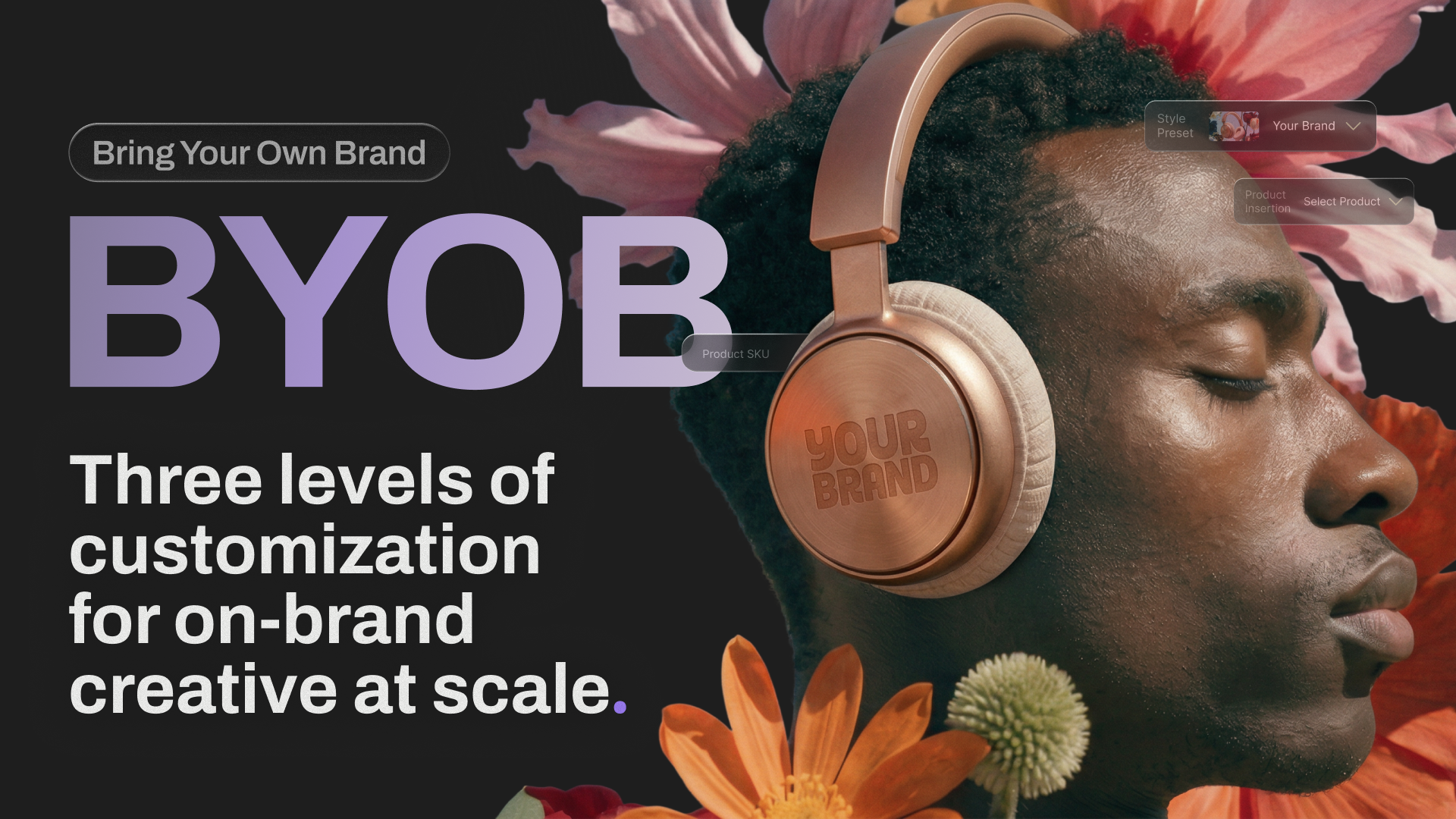
BYOB (Bring Your Own Brand): The three levels of customization you need to get on-brand creative at scale
Your brand can’t be reduced to a prompt. See what to do instead.
By Alex Gnibus, Enterprise Product Marketing Lead
Key Takeaways:
Every brand is being asked to do more with AI. Most aren’t getting what they actually need from off-the-shelf AI tools.
It's not about AI. It's about your brand: your visual identity, your audiences, your products. None of that can be reduced to a prompt.
There are multiple ways to bring your brand identity to AI tools, and prompting is just the first. Customization goes deeper than most tools allow.
Stability AI recently took the stage at Advertising Week Europe to talk with marketing, advertising, and brand leaders about something the AI industry doesn't talk about enough: Your brand.
Brand has never been more important. But the conversation has been all about the latest AI models and how great they are…while creative teams are struggling to get any of it to work for their brand.
So instead of talking about how great AI is, we wanted to focus on how great your brand is, and how to make sure your brand is built into the AI you use. We shared the three different ways you can create on-brand content at scale by customizing AI.
Read on to get the full walkthrough. (Bottles not included, but you won’t leave empty-handed).
The Three Levels of Customization, as told by Stability AI’s fictional brand
Stable Snacks is a global CPG portfolio with multiple regions and product SKUs, such as Salt & Vinegar crisps for the London audience segment. It’s also completely fictional. We created it using our own technology to demonstrate what’s possible with the three levels of customization.
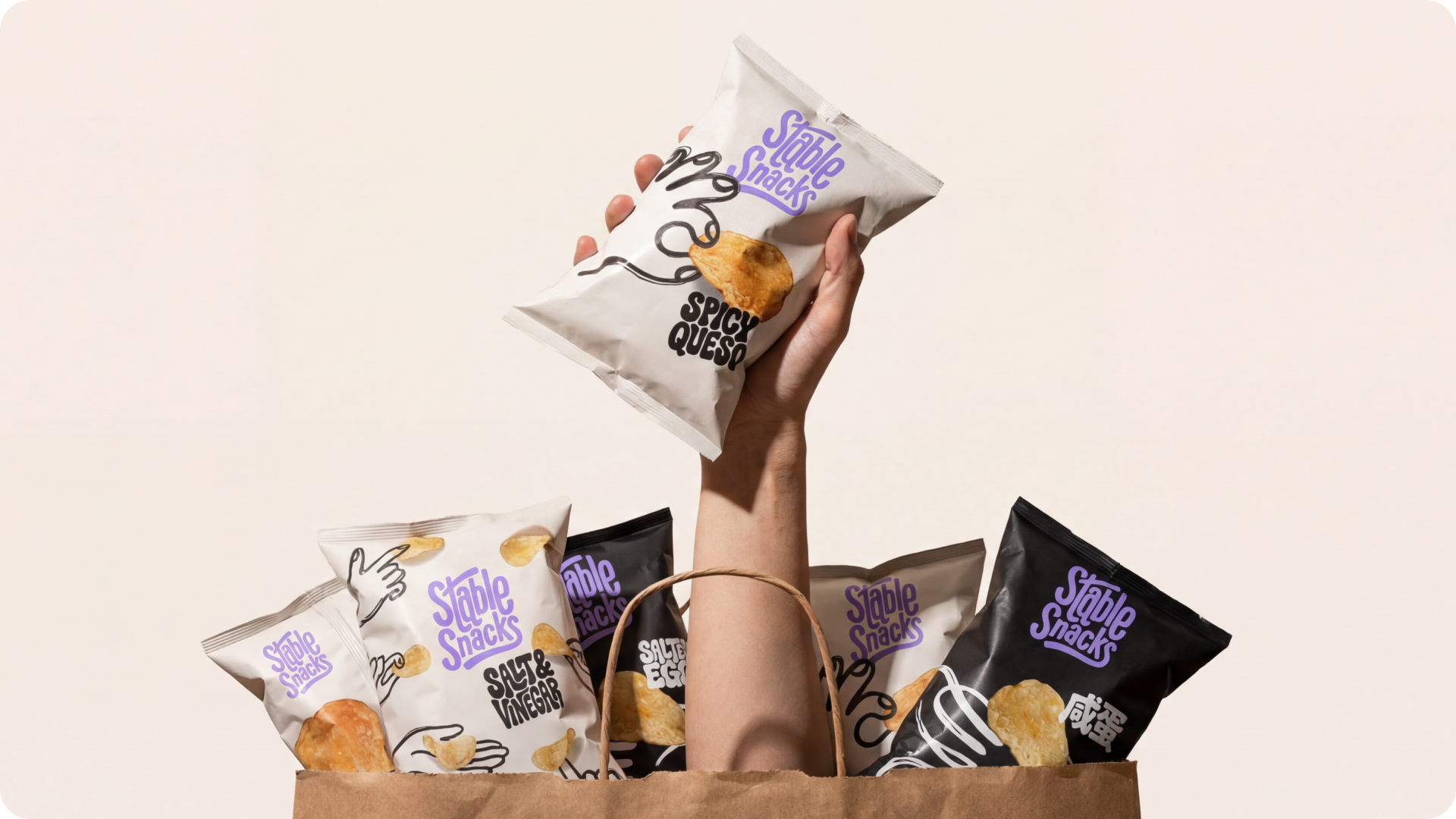
The challenge: Stable Snacks needs to generate more content, faster, while staying perfectly on-brand…across many different audiences and campaigns. Sound familiar?
And like every brand, the Stable Snacks brand identity includes many things: the color palette, font, logo, photography style, the graphics package. (But unlike every brand, Stable Snacks took us a couple weeks. We know a real brand can take years to build).
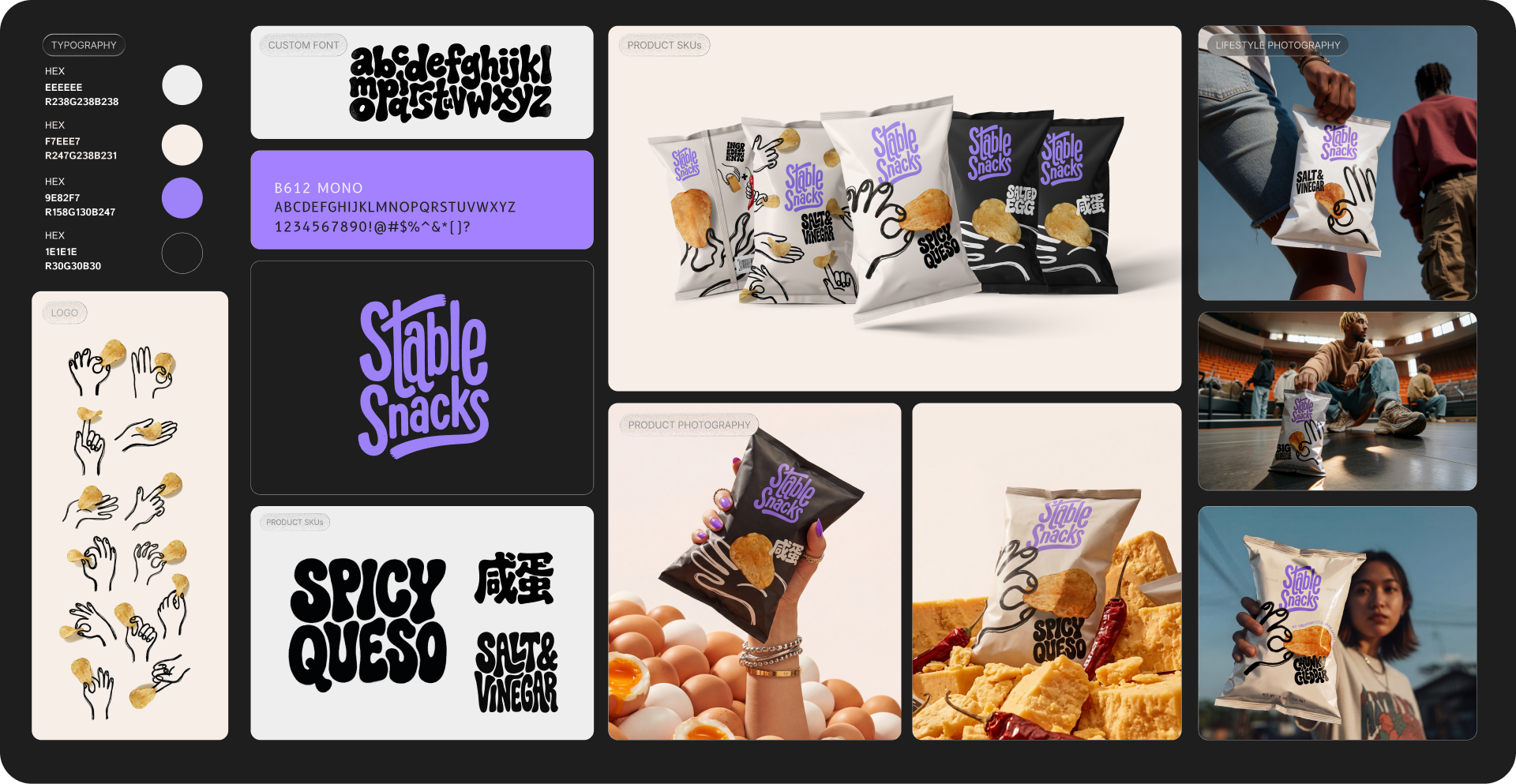
So how do we bring all of these brand elements to AI, so the AI can get it all right? Here are the three levels of customization you need.
Customization Level One: Prompting
This is where everyone starts. Prompting is still a useful way to give creative direction to a model. If you're in a concepting phase, exploring styles, or producing one-off reference images, a good prompt with an out-of-the-box model (such as Nano Banana) can get you started.
But as soon as you need precision and consistency, prompting falls apart fast. You end up needing what we call a “mega-prompt”...or the Odyssey, because it’s the length of an epic poem. The below was the real prompt we used to generate this image.
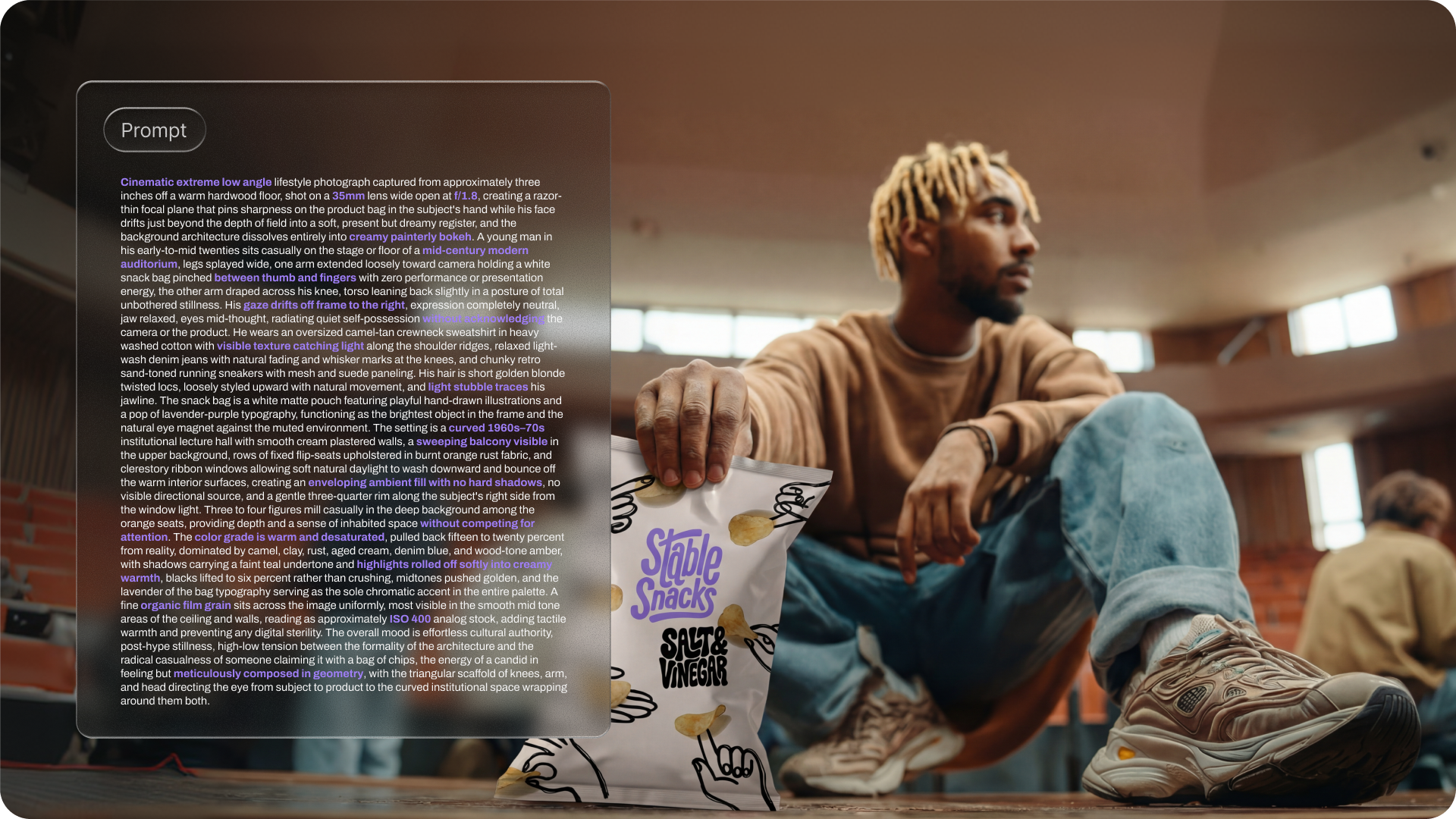
And that’s just step one of the manual process, stringing a bunch of different models and tools together to do everything from refining the prompt, to product insertion, to upscaling, in order to finally get just one usable image.
Which is why we say prompting is a stopgap, not a strategy. The moment a use case becomes repeatable, brand-sensitive, or business-critical, you need more customization. It’s time for the next level.
Customization Level Two: Custom Models
What’s a custom model? It’s an AI model that has learned your brand. To train a custom model, we add your data on top of an existing model so it understands your visual identity.
The most important part of this process is your dataset. In other words, it’s your brand. This can include anything that makes up your brand identity, such as lifestyle imagery, product photography, visual references, and campaign guidelines.
What makes a good dataset? There are two requirements:
Quality: The quality of what you bring in determines the quality of what comes out. Think of it like ingredients; even a perfect recipe can't save poor-quality inputs.
Quantity: A good dataset doesn't require thousands of images. Somewhere between 20 and 100 well-chosen ones is often enough. What matters more is that the images are diverse, accurate, and representative of what you want the model to learn.
Once a model is trained, the next step is to iterate on model versions until you get the model that works best. As the expert on the brand, your role here is to bring your taste. Only you can provide the editorial judgment of "this is on-brand, this isn't.”
With its own custom model, Stable Snacks can generate more images that get the photography style exactly right, minus the mega-prompt.
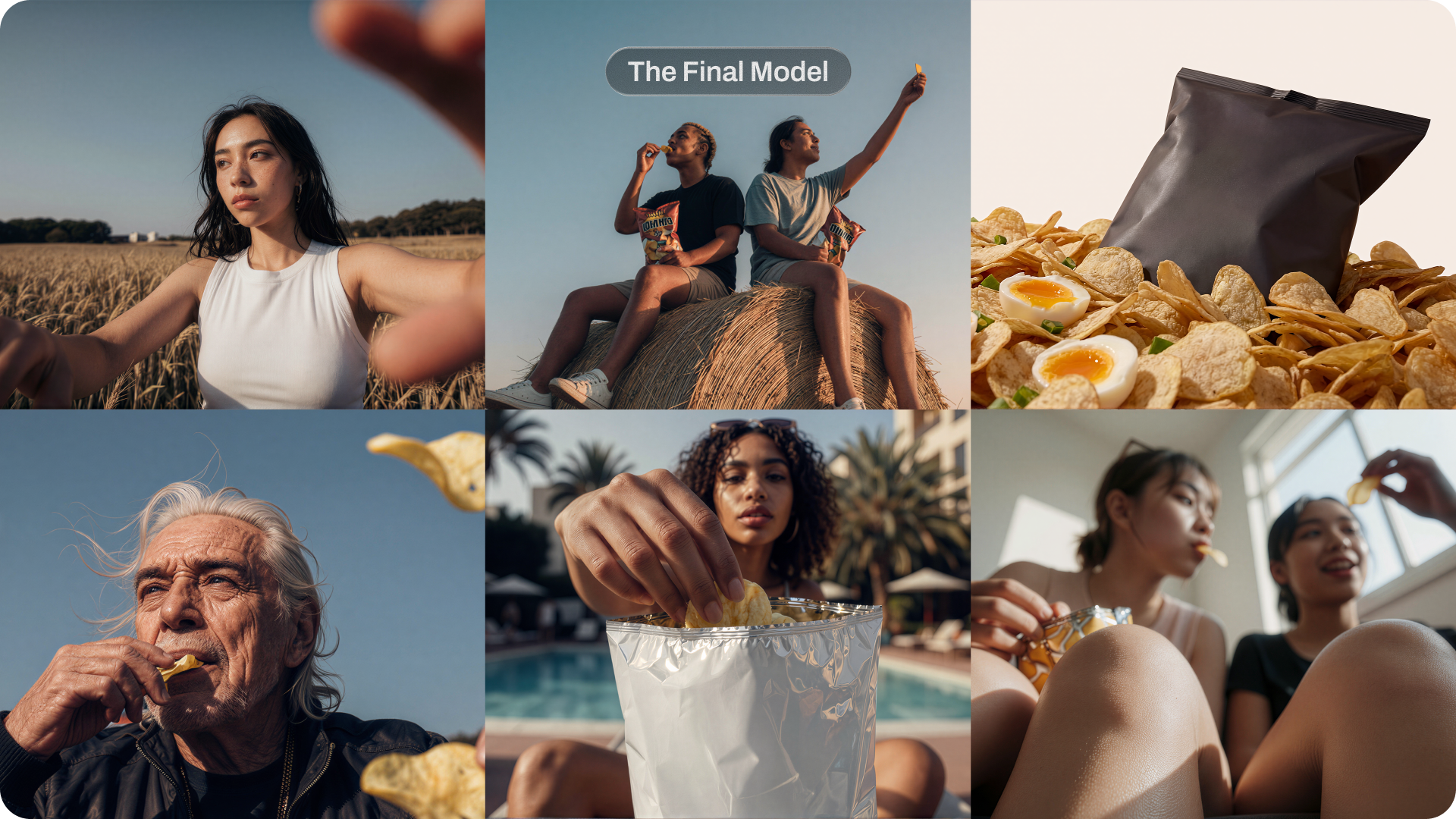
But you’ll notice something still missing: the product!
Even a custom model can’t do it all. For a brand like Stable Snacks, getting an image right requires many elements: the right photography style, the right color grading, the correct product SKU for the right flavor, the right regional settings, and high-resolution detail throughout.
No single model handles all of that simultaneously. You need a combination of models and tools.
Customization Level Three: Workflows
This is the level few teams are reaching -– but it’s the most critical for scaling on-brand content. A workflow is a combination of models and tools, assembled to handle a repeatable use case from start to finish.
For example, a workflow might include the following:
Prompt enhancement: Gives the model the extra context it needs behind the scenes, so that you don’t have to do the mega-prompt
Relighting: Does lighting adjustments
Custom model: Generate the base scene using the custom Stable Snacks Brand ID model to get the overall style right
Upscaling: Get the finer details right
Product insertion: Add the chip bag into the image with realism and accuracy
The below diagram shows what was needed to create each of the elements in this image.
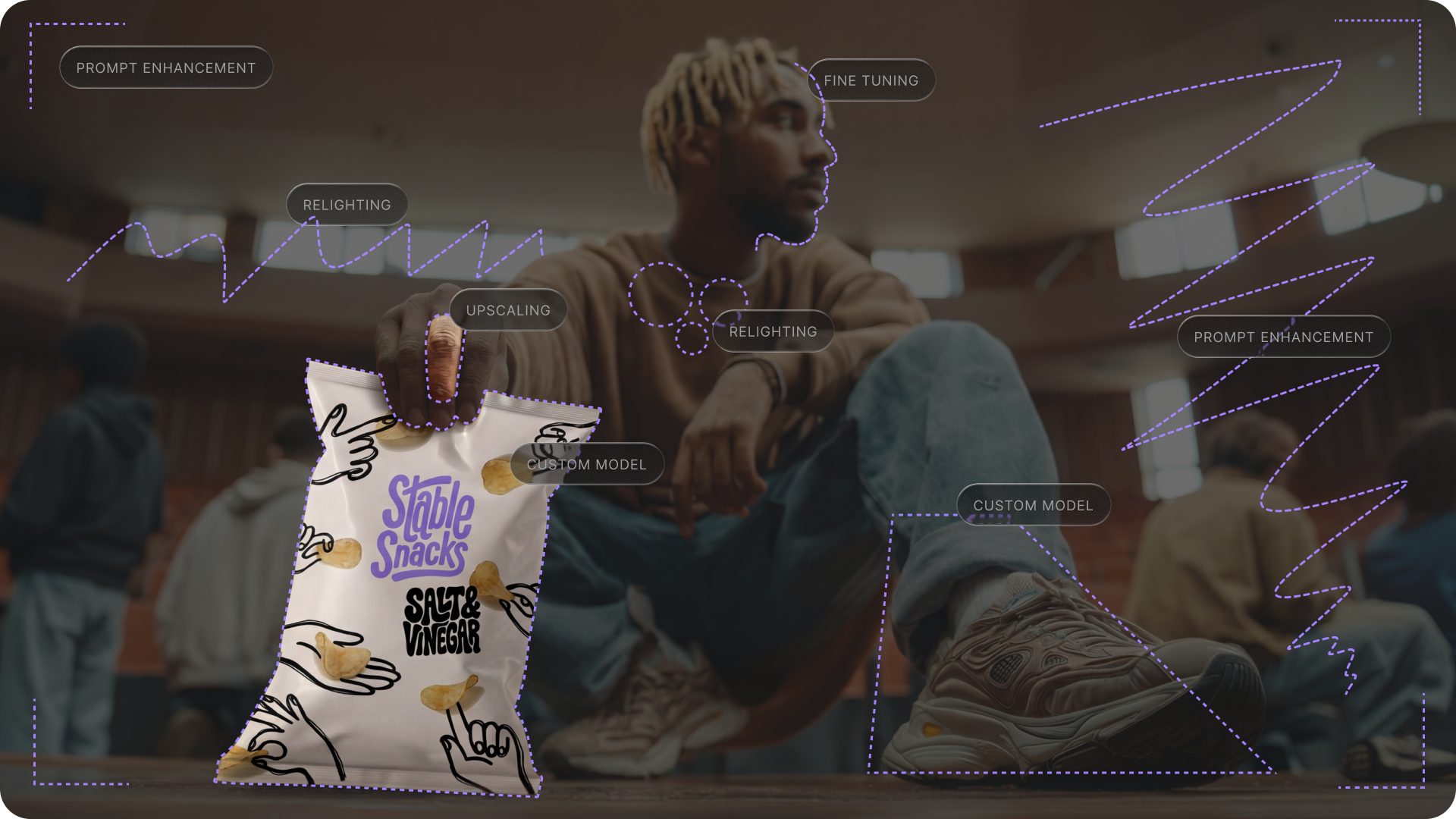
A workflow can be built in different ways; some platforms offer node-based workflows that involve connecting tools together on a canvas. Others offer agentic workflows, which means an AI agent makes decisions about which tools to use, handling the workflow setup automatically. Stability AI can also build entirely custom workflows that are delivered as a simple interface; get in touch here to learn more.
As one of our clients told us: "You’ve codified everything about our brand so that, as end users, we don't need to re-prompt for it."
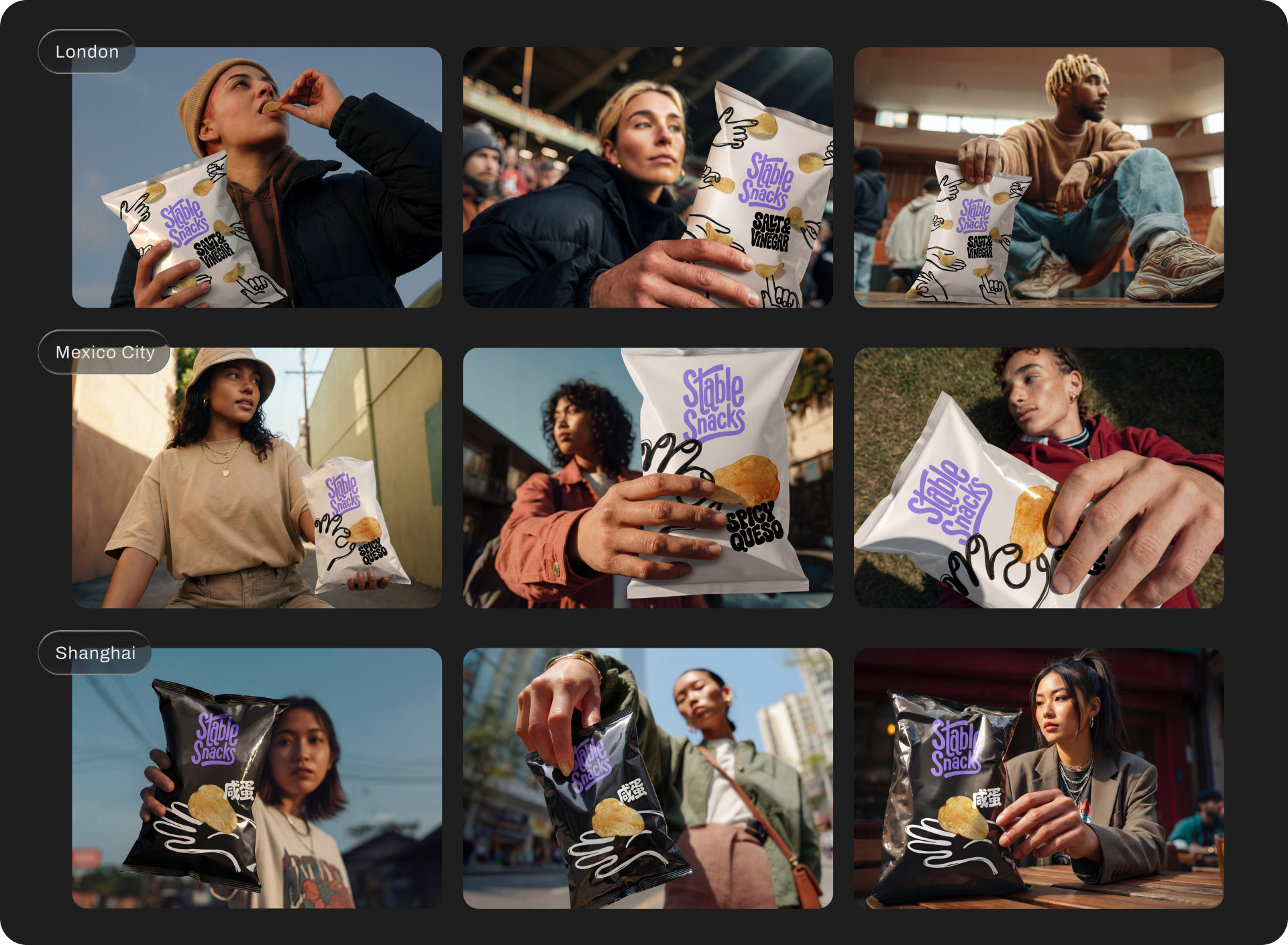
Workflows are how you get from spending a ton of time prompting and stringing tools together just to get one image right…to creating many variations for many different campaigns. In many cases, we’ll train a custom model on a brand identity for the overall style, and then create workflows for each campaign, such as “London Audience” or “Fall Outdoor Launch.”
Recap: What should my brand do to get started with generative AI customization?
Here are the three levels of customization we went over:
Level One: Prompting. Still useful for exploration, concepting, and one-offs. But remember it's a stopgap, not a strategy.
Level Two: Custom Models. Train a custom model on your brand's visual assets to get brand-accurate output.
Level Three: Workflows. The combination of models and tools that handles complex, repeatable use cases at scale. Build it once, use it across campaigns.
Interested in leveling up to get on-brand AI? We’re announcing something very soon that will give you a place for doing the three levels of customization we just talked about. We’d love for you to be among the first to try it.
To get on the list for early access, you can talk to our team here.
